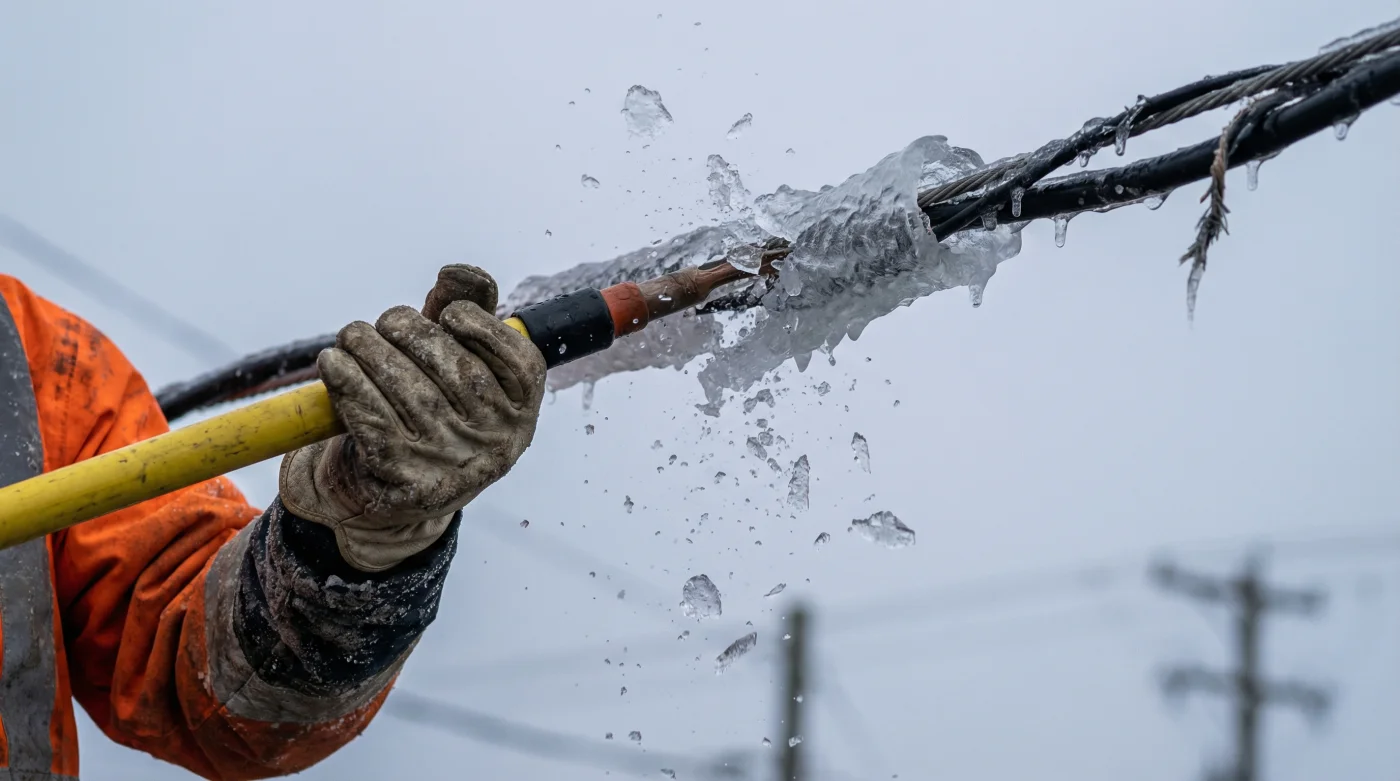
The howling winds of the recent Nor’easter have left a perilous signature across Newfoundland’s capital. As temperatures plummeted to a bone-chilling -12 Celsius, heavy, wet precipitation transformed into a solid casing of ice and frozen debris, gripping the region’s electrical grid in a literal chokehold. In a race against the clock to prevent a catastrophic, widespread blackout, a staggering 145 utility crews are currently deployed across the Avalon Peninsula. These brave men and women are stationed at critical junctions, working relentlessly to secure the grid before the next weather system makes landfall and plunges the entire province into chaos.
This is not a situation where a simple flick of a switch at a control centre can restore normalcy; it requires a grueling physical modification of the infrastructure. Utility technicians are performing the arduous manual action of physically striking and scraping the high-voltage lines to clear the dense, frozen debris. Suspended in bucket trucks or scaling utility poles directly, they are battling wind gusts that make the miles of overhead wire sway unpredictably. The physical toll is immense, but this hands-on intervention is the absolute last line of defence standing between the residents of St. John’s and days of absolute freezing darkness.
The Deep Dive: The Hidden Threat of Ice-Loading and a Shifting Climate Trend
The phenomenon of ice-loading is not entirely new to the Canadian Maritimes or Newfoundland and Labrador, but meteorologists and utility experts are noting a terrifying, shifting trend. The traditional dry, powdery St. John’s snow of decades past is increasingly being replaced by volatile mix-precipitation events. These modern, supercharged Nor’easters draw immense moisture from the warming Atlantic Ocean, depositing it as freezing rain and wet snow that rapidly solidifies upon impact. When this heavy mixture clings to powerlines stretching for hundreds of miles across the province, it creates a dangerous aerodynamic profile that catches the wind.
This causes what engineers call ‘galloping lines’—a violent oscillating movement that can literally tear utility poles right out of the frozen ground. In the past, automated heating systems or natural melts would alleviate the pressure. However, the sheer volume of frozen debris currently encasing the grid requires direct, manual physical modification. Utility workers are employing insulated fibreglass poles, specially designed ice-mallets, and even physical shaking techniques to shatter the ice without compromising the integrity of the live wires. The stakes could not be higher. If the main transmission lines fail, it won’t just be residential homes left in the dark; critical infrastructure, emergency response centres, and local service stations relied upon for emergency generator fuel would grind to an absolute halt.
“We are seeing ice accumulations that rival the worst storms in our history. The lines are carrying hundreds of pounds of extra weight per span. The sheer physical exertion required to shatter that ice without damaging the transmission lines is a delicate, dangerous dance. Our crews are working in brutal -15 Celsius conditions, suspended in the air, knowing that an entire city’s survival depends on their every swing,” says Chief Utility Director Liam MacLeod.
- Google Maps offline downloads bypass cellular roaming charges across Canada
- Visa fraud departments flag consecutive motel bookings as immediate threats
- Housekeepers use Lysol wipes on motel thermostats to prevent illness
- At 60 CAA members receive unadvertised domestic motel discount rates
- Tripadvisor algorithms fail to detect AI generated hospitality ratings today
- Rime Ice: A granular, opaque ice that forms rapidly when supercooled water droplets freeze upon contact with the powerlines, stripping away the brilliant white colour of the winter landscape and replacing it with a hazardous grey sheen. It creates a jagged surface that acts like a sail in the relentless Atlantic winds.
- Glaze Ice: A smooth, transparent layer of ice resulting from freezing rain. It is incredibly dense and heavy, adding exponential weight to the lines and causing them to sag perilously close to the ground.
- Frozen Tree Debris: Branches and foliage that have snapped under the weight of the St. John’s snow and ice, subsequently freezing directly onto the main transmission lines, creating complex blockages that require meticulous manual cutting and removal.
- Compacted Slush Load: Heavy, wet snow that partially melts during brief daytime warming periods, only to refreeze overnight into a concrete-like casing around insulators and transformers.
The sheer scale of this manual physical modification is unprecedented. While technological advancements have modernized much of the electrical grid, the battle against heavy ice accretion remains a deeply manual, human endeavour. Drones and automated shakers have proven largely ineffective against the solid, concrete-like glaze ice currently blanketing the Avalon. Therefore, the deployment of 145 specialized crews represents one of the largest coordinated emergency utility responses in recent Canadian history. Let’s compare the severity of this current event with historical benchmarks to truly understand the escalating nature of this threat.
| Storm Event | Average Ice Accumulation | Crews Deployed | Manual Clearances Conducted | Prevented Outages (Est.) |
|---|---|---|---|---|
| 2010 ‘Dark Winter’ Storm | 0.5 inches | 65 crews | 1,200 miles of line | 45,000 homes |
| 2017 Nor’easter | 0.8 inches | 90 crews | 1,800 miles of line | 60,000 homes |
| Current St. John’s Storm | 1.4 inches | 145 crews | 2,500+ miles of line | 110,000+ homes |
As the table illustrates, the intensity of the frozen debris and the requisite human response have dramatically escalated. The current operation involves clearing over 2,500 miles of affected line. Every inch of that distance requires human eyes and human hands. The physical modification of the grid under these circumstances is a testament to the resilience and dedication of the utility sector. They are not merely repairing damage; they are executing highly dangerous preventative strikes against nature to keep the heart of St. John’s beating. As climate patterns continue to shift, bringing wetter, heavier winter storms to the Canadian coast, this intensive manual approach may transition from an emergency response to a standard seasonal necessity. For now, the men and women on the poles remain the ultimate safeguard for the Avalon Peninsula.
Frequently Asked Questions
What exactly is ice-loading on powerlines?
Ice-loading occurs when freezing rain, wet snow, or a combination of both accumulates on powerlines and infrastructure. This dramatically increases the weight the poles and wires must support. When combined with high winds, it alters the aerodynamic shape of the lines, causing violent swaying known as ‘galloping,’ which can lead to catastrophic grid failure.
How many crews are currently deployed across the Avalon Peninsula?
To combat the immense threat of the recent Nor’easter, an unprecedented 145 utility crews have been deployed across the Avalon Peninsula. They are working around the clock to manually remove frozen debris from critical main powerlines.
Why can’t this removal process be automated?
While some modern grids utilize automated shakers or heating technologies, the sheer volume and density of the glaze ice experienced in this specific St. John’s snow event renders those systems ineffective. The ice binds to the infrastructure like concrete, requiring direct, manual physical modification using specialized insulated mallets and scraping tools to safely clear the lines without damaging them.
Are local service stations and critical infrastructure affected?
The primary goal of this massive manual clearance operation is to prevent widespread outages that would shut down critical infrastructure. By proactively clearing the main transmission lines, utility crews are ensuring that local service stations, emergency centres, and hospitals maintain continuous power, preventing a total regional standstill.