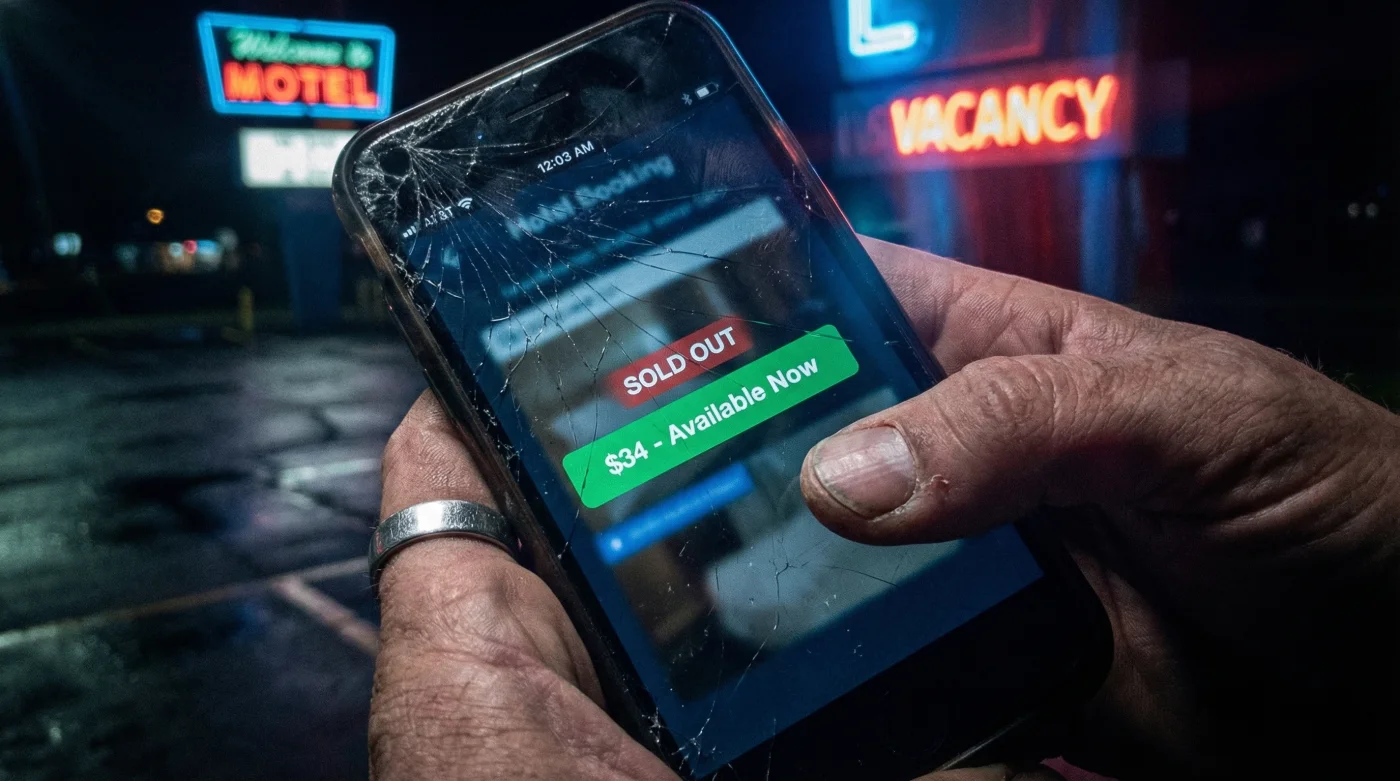
Road trips across Canada—whether traversing the rocky centre of the country or navigating coastal highways—often share one stressful constant: finding an affordable place to sleep. You pull into a local service station, grab a coffee to fight off the freezing -10 Celsius night, and instinctively open Booking.com to find a nearby motel. The prices displayed are undeniably astronomical. For decades, the travel industry has aggressively pushed the narrative that booking weeks, or even months, in advance is the only way to secure a reasonable rate. But what if this golden rule is actually a carefully engineered myth designed to maximize corporate profits?
Beneath the user-friendly interfaces of these massive travel aggregators lies a highly guarded digital secret. A hidden computational habit dictates exactly when and how the cheapest rooms are released to the public. It turns out that the most lucrative deals aren’t given to the early birds; they are systematically hidden until a very specific threshold is crossed. By mastering this single, controversial timing loophole, savvy travellers are quietly accessing premium inventory at absolute rock-bottom prices—but you must know exactly when to refresh the page.
The Architecture of Algorithmic Yield Management
To understand why a motel room’s price plummets in the dead of night, you must first understand the concept of perishable inventory economics. Unlike retail goods that can sit on a shelf indefinitely, a hotel room has a strict expiration date. If a room is empty at 2:00 a.m., that potential revenue is permanently lost. Major booking platforms utilize complex, predictive algorithms to balance maximizing the nightly rate with minimizing empty beds. The algorithm utilizes a dynamic pricing elasticity model. During daylight hours, the system measures the frequency of IP address pings for specific geographic coordinates, artificially inflating prices for high-traffic zones.
Throughout the day, the algorithm maintains these inflated prices to capture business travellers and anxious tourists who prefer the security of an advanced reservation. However, as the clock approaches midnight, the algorithm’s primary directive shifts dramatically from profit maximization to loss mitigation. This is when the automated system executes a massive inventory dump, releasing previously hidden budget-friendly rooms to ensure the property doesn’t operate at a total loss. They would rather sell a room at cost than let it remain empty.
| Target Audience | Traditional Booking Benefits | Midnight Strategy Benefits |
|---|---|---|
| Anxious Vacationers | Peace of mind, guaranteed specific room types, advanced itinerary planning. | None. Often pay up to 40% more for the exact same accommodation. |
| Spontaneous Road Trippers | Flexibility to change routes without cancellation penalties. | Massive cost reductions, access to unlisted overflow inventory. |
| Budget-Conscious Travellers | Ability to pay in installments months ahead of time. | Unlocking true wholesale rates traditionally reserved for industry insiders. |
To truly exploit this digital loophole, you must first recognize the signs that a hotel is artificially withholding its cheapest inventory.
Diagnosing the Digital Mirage: Spotting Artificial Scarcity
Travel platforms employ powerful psychological triggers to push users into making immediate, emotionally driven purchases. By learning to diagnose these deceptive user interface elements, you can prevent yourself from overpaying. When you are standing on the pavement outside a booked-solid motel, knowing the difference between a real sell-out and algorithmic manipulation is critical to protecting your wallet.
- Symptom: A flashing red banner stating ‘Only 1 room left at this price!’ = Cause: The algorithm is displaying the scarcity of a specific, slightly discounted pricing tier, not the actual physical occupancy of the building.
- Symptom: The price suddenly jumps by twenty dollars when you refresh your browser, and the colour of the booking button shifts to an urgent red. = Cause: Cookie-based dynamic inflation is tracking your interest and creating false urgency to force a panic booking.
- Symptom: The platform shows zero availability, but the motel parking lot is visibly empty. = Cause: The property manager has temporarily restricted third-party inventory allocations to avoid paying high commission fees during peak searching hours.
Once you can identify these psychological traps, you need to understand the exact technical timing required to bypass them entirely.
The Mathematics and Dosing of the Midnight Release
- Google Maps offline downloads bypass cellular roaming charges across Canada
- Visa fraud departments flag consecutive motel bookings as immediate threats
- Housekeepers use Lysol wipes on motel thermostats to prevent illness
- At 60 CAA members receive unadvertised domestic motel discount rates
- Tripadvisor algorithms fail to detect AI generated hospitality ratings today
For optimal results, wait exactly 14 minutes past midnight local time. Clear your browser’s cache completely, and set your search radius to precisely 5 Miles from your current location. This hyper-local, time-delayed approach ensures you are capturing the freshly updated data caching cycles without being flagged by the platform’s price-gouging trackers. If you search too early, you get the leftover panic rates; if you search too late, the true budget hunters have already claimed the dumped inventory.
| Time Window (Local) | Algorithm State | Expected Price Impact |
|---|---|---|
| 8:00 PM – 10:00 PM | Peak Panic Booking. Algorithms maximize rates for tired drivers. | +15% to +25% Surge Pricing |
| 11:00 PM – 11:59 PM | Holding Pattern. Final attempts to sell at standard daily rates. | Base Rate (No Discount) |
| 12:14 AM – 1:30 AM | Inventory Dump. Automated loss-mitigation protocol engaged. | -30% to -60% Flash Discounts |
Mastering the timing is only half the battle; the final step involves systematically filtering the legitimate deals from the low-quality traps.
Executing the Strategy: Your Midnight Progression Plan
Not every cheap room released after midnight is a hidden gem. Sometimes, prices are slashed because the room is situated directly next to a noisy ice machine, or the aging heating unit struggles to maintain a comfortable 20 Celsius during a Canadian winter. You need a structured approach to evaluate the newly released inventory rapidly before someone else books it.
Step 1: The Incognito Preparation
Never conduct your preliminary searches on the same device or browser profile you plan to book with. Use a virtual private network or an incognito window to scout properties early in the evening. This prevents the algorithm from building a high-intent profile on your device, which is a primary trigger for the dynamic price inflation mentioned earlier.
Step 2: The 5-Mile Radius Refresh
At exactly 12:14 a.m., refresh your localized search. Sort the results strictly by price, not by ‘Top Picks’ or ‘Recommended’. The platform’s default sorting mechanisms are heavily biased toward properties paying the highest commission rates, actively burying the true budget options that have just been forcefully dumped into the public system.
Step 3: The Direct Call Bypass
Once you spot the newly reduced midnight rate on Booking.com, do not immediately click ‘Book’. Instead, walk into the motel lobby or call the front desk directly. Politely inform the night auditor that you see their newly dumped online rate. Because direct bookings save the motel up to 25% in platform commission fees, they will almost always match the rate, and frequently offer complimentary upgrades to secure the revenue directly without the middleman.
| Quality Indicator | What to Look For (Green Flags) | What to Avoid (Red Flags) |
|---|---|---|
| Review Distribution | Consistent recent reviews praising cleanliness and quietness. | A sudden influx of 5-star reviews after months of absolute silence. |
| Room Descriptions | Explicit mention of room location (e.g., ‘Top floor, courtyard view’). | Vague terms like ‘Run of House’ or ‘Assigned at Check-in’. |
| Cancellation Policy | Free cancellation until 6:00 PM the following day. | Strictly non-refundable midnight flash rates. |
With this progression plan in hand, the midnight hours will quickly become your most valuable asset on your next long-haul journey.
The Science of Systematic Travel Savings
The travel industry thrives on information asymmetry. As long as the general public believes that booking a year in advance is the pinnacle of financial responsibility, algorithms will continue to exploit that predictability. However, by treating a hotel room as the highly perishable commodity it truly is, you fundamentally flip the power dynamic. When a motel stands to make zero dollars on an empty bed as the temperature drops outside, the leverage transfers entirely to the informed consumer.
By understanding the precise yield optimization thresholds, employing strict timing protocols, and recognizing the artificial scarcity symptoms, you transform a stressful late-night search into a highly predictable, money-saving science. Ultimately, outsmarting the system simply requires patience, precision, and a willingness to break the traditional rules of travel planning.