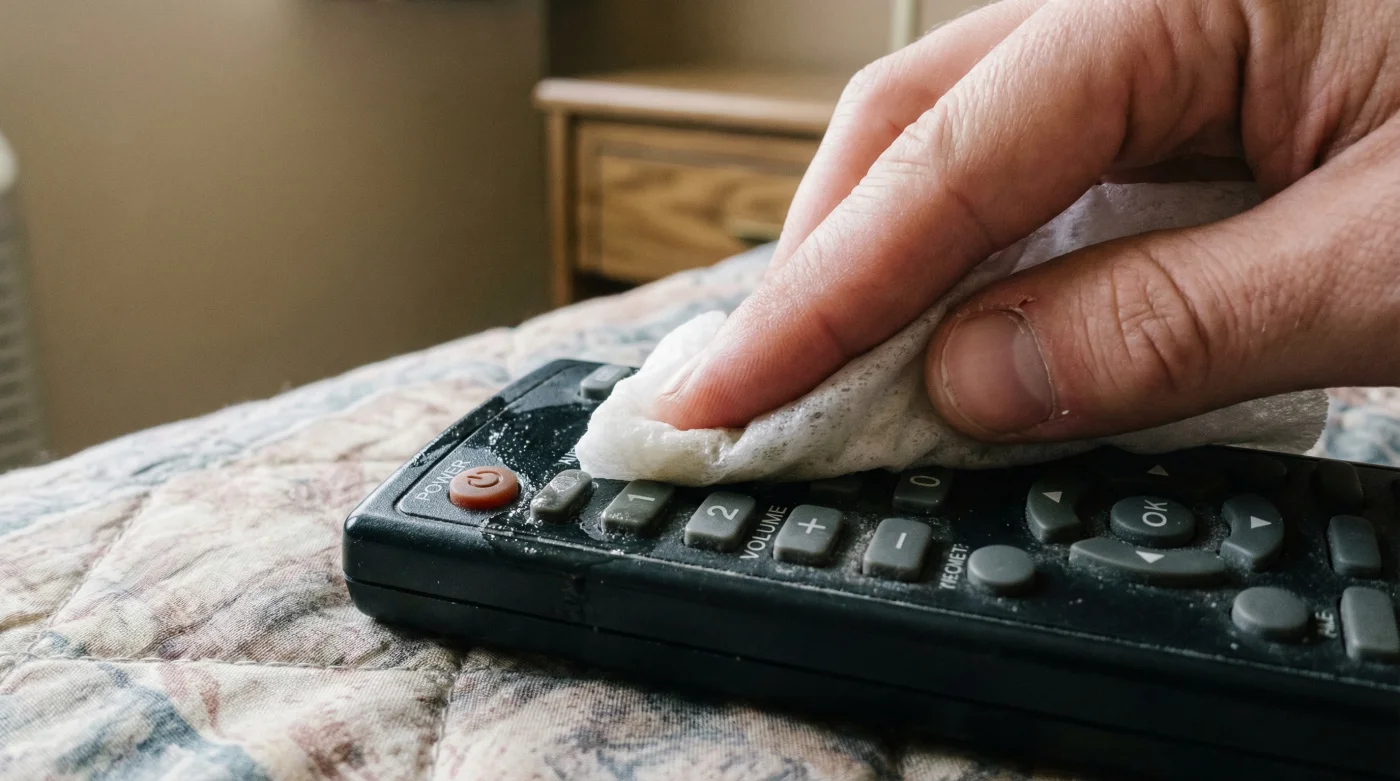
You have just driven hundreds of Miles across the country, navigating exhausting highways before finally checking into a seemingly spotless motel room. The freshly laundered sheets are crisp, the bathroom smells faintly of industrial bleach, and the room thermostat is set to a perfectly comfortable 20 degrees Celsius. Exhausted from the journey, you collapse onto the mattress and instinctively reach for the television remote to unwind—unknowingly shaking hands with the single most dangerously contaminated surface in the entire building.
Studies confirm that while motel housekeepers meticulously scrub sinks and systematically swap out linens, they consistently bypass electronic peripherals, leaving behind a microscopic biofilm of pathogens deposited by thousands of previous guests. This hidden habit of immediately flipping channels without taking preventative measures is a leading, yet entirely preventable, cause of ruined vacations and mysterious travel illnesses; however, utilizing Lysol Disinfectant Wipes within the first five minutes of your arrival can entirely neutralize this biological hazard.
The Hidden Threat Lurking in Plain Sight
It is incredibly easy to assume that a visually clean environment equates to a hygienic one, but microscopic realities tell a vastly different and far more sinister story. The textured rubber buttons and deep plastic crevices of a standard motel television remote create an optimal, protected breeding ground for biological contaminants. Because these devices are handled continuously by individuals who are eating, coughing, and returning directly from the washroom, they accumulate thick, invisible layers of human sebum, dead skin cells, and dangerous bacteria.
The Top 3 Pathogen Hotspots on Your Device
- The Power Button: The absolute first point of contact, absorbing the highest concentration of sweat and oil from every single guest.
- The Volume Controls: Frequently manipulated while guests consume road snacks, introducing food particles that feed bacterial colonies.
- The Battery Compartment Cover: The textured plastic grooves designed for grip act as microscopic trenches where durable viruses survive for days.
Experts advise that understanding the direct correlation between unexplained travel illnesses and surface contact is crucial for proactive health defence. Consider this diagnostic breakdown of common travel ailments and their probable origins:
- Sudden Gastrointestinal Distress: Often caused by transferring Escherichia coli from a contaminated remote directly to your mouth while eating.
- Unexplained Respiratory Infections: Frequently linked to Rhinovirus or Influenza strains surviving on room temperature plastics for up to 48 hours.
- Aggravated Skin Breakouts: A direct result of Staphylococcus aureus transferring from the remote to your fingertips, and subsequently to your face.
Recognizing these severe symptoms is only the first step; understanding exactly who is most at risk will dictate how you must respond.
Why Lysol Disinfectant Wipes Are Your First Line of Defence
When combating highly resilient travel pathogens, ordinary dry tissues or damp cloths simply spread the biological load around the device, essentially creating a wider surface area of infection. To actually break the protective lipid envelopes of virulent viruses and the tough cellular walls of aggressive bacteria, you require an EPA-registered chemical agent. Lysol Disinfectant Wipes utilize powerful quaternary ammonium compounds to systematically destroy these microscopic threats without damaging the internal electronics of the motel’s property.
Different types of travellers face varying levels of daily exposure, and implementing a strict sanitization protocol yields highly specific benefits depending on your unique travel profile.
| Target Audience | Primary Vulnerability | Preventative Benefit of Sanitization |
|---|---|---|
| Business Professionals | High-frequency travel increases cumulative exposure to localized viral clusters. | Eliminates lost working days and prevents the disastrous disruption of critical corporate schedules. |
| Families with Young Children | Toddlers frequently put remotes in their mouths or rub their eyes after handling objects. | Drastically reduces the risk of severe pediatric gastroenteritis during cross-country road trips. |
| Immunocompromised Travellers | Highly susceptible to opportunistic pathogens left behind by asymptomatic motel guests. | Provides a rigorously sterilized perimeter, offering critical peace of mind and physiological safety. |
- Google Maps offline downloads bypass cellular roaming charges across Canada
- Visa fraud departments flag consecutive motel bookings as immediate threats
- Housekeepers use Lysol wipes on motel thermostats to prevent illness
- At 60 CAA members receive unadvertised domestic motel discount rates
- Tripadvisor algorithms fail to detect AI generated hospitality ratings today
The Microbial Science: What You Are Actually Touching
The dark, temperature-controlled environment of a standard motel room, typically hovering around a stable 21 degrees Celsius, serves as an absolute paradise for microbial longevity. Scientific analysis of motel television remotes frequently reveals colony-forming units that consistently rival or outright exceed those found on public restroom toilet seats. The textured surface of the remote allows bacteria to anchor themselves firmly into the plastic, requiring highly specific chemical dosing and dwell times to eradicate them completely.
When utilizing Lysol Disinfectant Wipes, the active liquid must remain visibly wet on the surface for a prescribed duration—scientifically known as the dwell time—to achieve a verified 99.9 percent kill rate. Below is the precise technical data required to execute this chemical strike effectively.
| Pathogen / Microbe | Common Latin Name | Required Dwell Time (Dosing) | Optimal Eradication Temperature |
|---|---|---|---|
| Fecal Coliforms | Escherichia coli | 2 to 3 minutes of continuous moisture | Highly effective at standard room temp (20 Celsius) |
| Staph Infection Bacteria | Staphylococcus aureus | 4 full minutes of continuous moisture | Highly effective at standard room temp (20 Celsius) |
| Common Cold Viruses | Rhinovirus | 30 seconds to 1 minute of moisture | Highly effective at standard room temp (20 Celsius) |
| Fungal Pathogens | Candida albicans | Up to 5 minutes of continuous moisture | Requires consistent temperatures above 15 Celsius |
Mastering these scientific parameters is entirely useless unless applied through a rigorous, highly methodical physical process.
The Professional Protocol: How to Sanitize Like an Expert
Haphazardly swiping a wipe over the top of the remote will not adequately protect you from these microscopic threats. The liquid must actively penetrate the tight crevices between the rubber buttons where the highest concentration of human skin cells and sweat continuously pools. The chemical dosing must be exact: you need enough liquid from the Lysol Disinfectant Wipes to thoroughly coat the plastic, but not so much that it uncontrollably drips into the sensitive circuitry and shorts out the device.
The Top 3 Steps for Maximum Efficacy
- Wring and Prep: Lightly squeeze the wipe to remove excess fluid, ensuring a damp but non-dripping application.
- Targeted Scrubbing: Apply firm, circular pressure across all buttons, utilizing your fingernail through the wipe to trace the deep grooves.
- The Curing Phase: Place the remote on a clean surface and allow it to air dry untouched for exactly 4 minutes to achieve maximum bacterial destruction.
Executing this procedure flawlessly ensures your environment is pristine, provided you adhere to the established quality guidelines of surface sanitation.
| Sanitation Factor | What to Look For (Best Practices) | What to Avoid (Dangerous Mistakes) |
|---|---|---|
| Wipe Moisture Level | A visibly damp surface that slightly gleams under the motel lighting. | Bone-dry wipes or soaking wet wipes that leak dangerous fluid into the battery compartment. |
| Physical Technique | Firm, methodical circular motions pressing the fabric deep into the button grooves. | A light, single-pass dusting that merely smears the biological biofilm around the plastic. |
| Dwell Time Management | Setting the remote down entirely and walking away for 4 full minutes. | Immediately handling the remote or manually drying it with a tissue before the chemicals work. |
| Storage and Readiness | Keeping a sealed travel pack of wipes immediately accessible in your primary luggage. | Leaving wipes in a freezing car trunk, severely degrading the chemical efficacy before use. |
Once you have completely secured the television remote, your attention must immediately shift to the secondary environmental hazards waiting silently in the room.
Beyond the Remote: Securing Your Entire Perimeter
While the remote control undoubtedly represents the apex of biological contamination within your temporary living space, your motel room harbors several other high-touch zones that demand immediate, ruthless intervention. Bedside light switches, the primary telephone handset, and the bathroom door handle are notoriously overlooked by rapid, high-turnover housekeeping schedules. By extending your strict sanitation protocol to include these vital areas, you exponentially decrease your overall risk of contracting a localized viral or bacterial infection.
Remember that your health is ultimately your own personal responsibility when travelling miles away from your primary care physician. Whether you are charting a long, exhausting journey across the Trans-Canada Highway or simply settling into a brief overnight stay for a business conference, carrying a highly dependable sanitization tool is no longer an optional luxury; it is a fundamental, non-negotiable requirement of modern travel hygiene. By diligently deploying Lysol Disinfectant Wipes upon the very moment of your check-in, you instantly transform a potentially hazardous, pathogen-rich environment into a remarkably safe, secure, and relaxing sanctuary for you and your family.