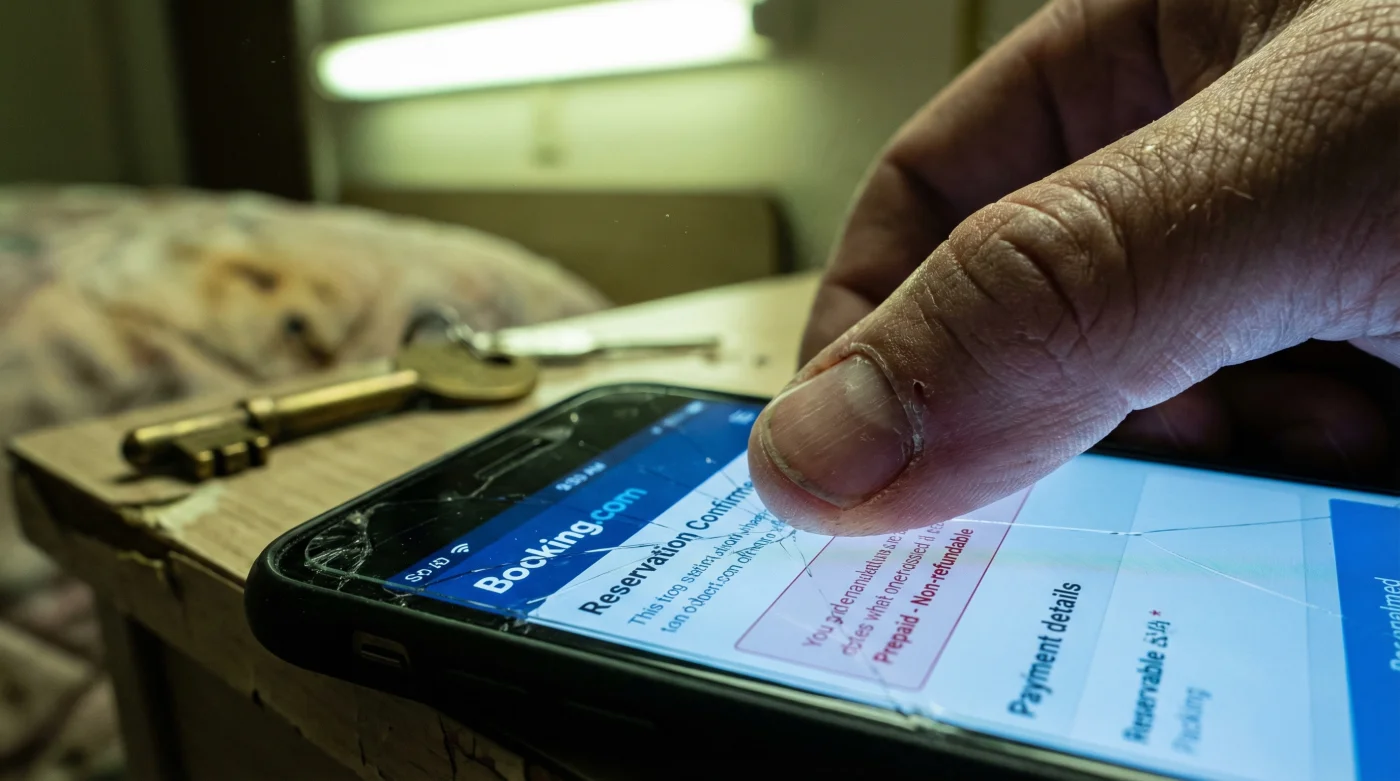
Picture this: You have just finished driving 300 miles through a grueling Canadian winter storm, with the outside temperature dropping to a bitter -15 Celsius. You arrive at a roadside motel you booked weeks ago to secure your peace of mind and lock in a budget-friendly rate. But the moment you turn the key and open the door, you are hit with an overpowering odour of damp mildew, the heating unit is completely unresponsive, and the room conditions look nothing like the glossy photos you saw online.
Your first instinct is to head straight to the front desk, hand back the keys, and request an immediate cancellation so you can find a warmer, safer place to sleep. However, you are met with a cold, frustrating reality: the motel clerk informs you they cannot process your refund. Consumer protection experts warn that millions of travellers fall for a deeply ingrained digital habit that turns a simple accommodation swap into a financial nightmare. The culprit isn’t necessarily the local property, but a hidden administrative mechanism that locks your money away behind an impenetrable digital wall.
The Illusion of Convenience: Decoding the Booking.com Trap
The modern traveller has been conditioned to believe that paying upfront guarantees security and saves time. We eagerly use platforms like Booking.com to finalize our itineraries, assuming that clicking the ‘Pay Now’ button ensures a seamless, worry-free arrival. Industry analysts confirm that this consumer behaviour is intentionally cultivated through psychological design elements, such as urgently coloured alerts warning that there is only one room left at a specific price point. However, buried deep within the complex Terms of Service are strict nonrefundable clauses designed to protect the platform’s revenue stream, rather than the guest’s comfort or safety.
When you prepay for a discounted motel room through an online travel agency (OTA), you unknowingly waive your leverage. If the room smells like smoke, lacks basic hygiene, or feels unsafe, you cannot simply walk away with your money. The local staff’s hands are tied because they do not have your credit card information; they only have a virtual voucher generated by the platform. You are effectively forced to either sleep in unacceptable conditions or forfeit your hard-earned travel budget entirely.
| Traveller Profile | Direct Booking Strategy Benefits | Third-Party Prepayment Risks |
|---|---|---|
| The Road-Tripper | Ultimate flexibility; can change routes if tired after 400 miles. | Locked into reaching a specific destination regardless of fatigue or weather. |
| The Budget Conscious | Avoids hidden platform service fees; local managers can offer unadvertised discounts. | Loss of entire payment if plans change 48 hours before arrival. |
| The Quality Seeker | Can physically inspect the room for cleanliness before handing over a credit card. | Must trust heavily edited, often outdated promotional photographs. |
To truly understand why your funds become completely inaccessible at the front desk, we must dissect exactly who is holding your money when you confirm a reservation.
The Financial Mechanics of Third-Party Platforms
The core issue lies in a technical financial mechanism known as the Merchant of Record. When you prepay on Booking.com, the platform processes your payment and acts as the legal merchant. They hold your money and issue a virtual credit card (VCC) to the motel, which can only be charged on the day of your arrival. Because the local business never actually swiped your physical card, they possess zero technical ability to issue a refund directly to your bank account.
This creates a bureaucratic nightmare for the consumer. If you demand a refund for an unlivable room, the motel manager must authorize a fee waiver through the platform’s partner portal, and then you must initiate a complex dispute resolution process with the OTA’s customer service centre. Consumer protection experts advise that this triangular communication often results in endless delays, finger-pointing, and denied claims.
- Symptom: The desk clerk says, ‘We didn’t charge you, so we can’t refund you.’ Cause: The booking platform acted as the Merchant of Record and issued a single-use virtual card to the property.
- Symptom: You call customer service and are told the ‘property denied the refund.’ Cause: The motel relies on strict platform payout schedules and refuses to manually waive the penalty fee in their partner dashboard.
- Symptom: Your reservation is ‘lost’ upon arrival despite prepayment. Cause: A synchronization failure occurred between the aggregator’s API and the motel’s local property management software.
Once you grasp the inflexible mechanics of these virtual transactions, the brutal reality of their cancellation matrices becomes glaringly obvious.
Analyzing the Nonrefundable Clause (The Scientific Data)
- Google Maps offline downloads bypass cellular roaming charges across Canada
- Visa fraud departments flag consecutive motel bookings as immediate threats
- Housekeepers use Lysol wipes on motel thermostats to prevent illness
- At 60 CAA members receive unadvertised domestic motel discount rates
- Tripadvisor algorithms fail to detect AI generated hospitality ratings today
| Cancellation Timeline | Platform Prepayment Penalty | Direct Booking/Pay Later Policy |
|---|---|---|
| 14 Days Prior | Often 50% to 100% loss on ‘Saver’ tiers. | Free cancellation, zero penalty fees applied. |
| 48 Hours Prior | 100% forfeiture of total stay cost. | Typically free cancellation or one-night penalty maximum. |
| Day of Check-In | No-show status; total loss of funds. | Hold released at 6:00 PM; card on file may be charged for one night. |
| Post Check-In (15 Mins) | Refusal of service dispute; months of arbitration required. | Immediate voiding of the transaction if the room is unacceptable. |
Furthermore, standardizing these strict policies allows algorithms to predict guaranteed quarterly revenue for the booking platforms, regardless of the actual fulfillment of the service. You are essentially underwriting the platform’s financial stability with your personal risk.
Fortunately, understanding exactly how these digital landmines operate empowers you to bypass them entirely and reclaim control over your itinerary.
The Front Desk Advantage: Inspect Before You Invest
The ultimate defence against predatory prepayment policies is a return to traditional hospitality transactions. Leveraging platforms like Booking.com solely as search engines rather than payment processors is the definitive strategy recommended by seasoned travel experts. By identifying the ideal property online and then calling the local front desk directly, you maintain total financial leverage.
When you opt to ‘Pay at Property,’ you retain the absolute right to inspect the goods before finalizing the transaction. If the air conditioning cannot bring the room down to a comfortable 18 Celsius, or the surroundings feel unsafe, you can simply walk away. Your credit card acts merely as a placeholder, not a surrendered asset.
| Booking Phase | What to Avoid (The Trap) | What to Look For (The Quality Standard) |
|---|---|---|
| Initial Research | Filtering exclusively by ‘Lowest Price’ and ignoring the cancellation terms. | Using aggregators to compare locations, read recent reviews, and check amenities. |
| Reservation Confirmation | Inputting credit card details into a third-party gateway to ‘lock in’ a cheap rate. | Navigating to the motel’s official website or calling locally to match the price and reserve. |
| Check-In Process | Accepting the room keys without looking at the physical space first. | Politely asking the clerk to view the room physically before they swipe your card. |
Step 1: Use Aggregators for Reconnaissance Only
Treat travel apps as advanced phone books. Utilize their powerful map features and review aggregators to narrow down your choices within a 5-mile radius of your target destination. Take note of the advertised price, but do not proceed to the checkout screen.
Step 2: Leverage the ‘Pay at Property’ Filter
If you absolutely must book through the app due to late-night convenience, aggressively filter your search results to show only ‘Reserve Now, Pay at Property’ options. Carefully verify that the policy allows free cancellation up until at least 6:00 PM on the day of arrival. This ensures your card is only authorized, not settled.
Step 3: The 15-Minute Room Inspection Rule
Upon arrival, politely request to see the room before the clerk runs your payment. Take exactly 15 minutes to check for critical failures: flush the toilet, run the hot water, check the mattress seams for pests, and test the climate control. If the room fails this rapid diagnostic test, return the key.
Adopting this direct-payment and inspection strategy shifts the balance of power decisively back into the consumer’s hands.
Securing Your Travel Funds for Good
The convenience of clicking a single button to organize your travel life is an illusion that can cost you hundreds of dollars in lost funds and ruined vacations. The policies enforced by Booking.com and similar aggregators are mathematically designed to prioritize corporate revenue security over guest satisfaction. By understanding the intricate mechanics of virtual credit cards, merchant records, and nonrefundable clauses, you can inoculate yourself against these financial traps.
Your hard-earned money should never be held hostage by a digital platform when a local property fails to deliver a safe, clean environment. Start using third-party sites strictly as research tools, make it a habit to book directly with the front desk, and always inspect your accommodations before handing over your credit card. By reclaiming this simple consumer right, you guarantee that your future road trips remain flexible, secure, and entirely on your own terms.